
Part Lifecycle
Determine how a part can be transacted
Español: Lee esta página en español.
Français : Consultez cette page en français.
This page applies to DataNinja tenants integrated with NetSuite or QuickBooks Online, and to tenants with no finance system integration. The workflow in DataNinja is the same across integrations; where a financial system changes behavior, the integration-specific note calls it out.
Items that are synced with an integration will show the relevant integration's logo. Screenshots on this page may show the NetSuite logo, but tenants integrated with QuickBooks Online will see that logo instead. Tenants with no financial integration won't see any logo.
What is Part Lifecycle?
Part Lifecycle is an optional setting that controls which types of business transactions are allowed for a part. The Lifecycle setting of a part manages stages from inception, through R&D and manufacturing, to end of distribution, and eventually retirement.
The following lifecycle "stages" are available in the system:
- Initialized
- R & D
- Industrialization
- Distribution
- Replenishment End
- Sales End
- Closed
Go with DistributionNot sure which one fits your needs? Go with "Distribution". This lifecycle setting has no restrictions.
What does the Part Lifecycle setting do?
The current lifecycle of a part controls what can be done with it in the system. These controls act like an extra, automated check against data entry errors.
| Lifecycle | What it allows or restricts |
|---|---|
| Initialized | Allows the part to be tracked, but prevents new purchases of the part, and does not allow production or shipping of the part. |
| R&D/Industrialization | Allows full lab inventory traceability entries, while preventing shipment to customers if the part is mistakenly entered on a customer order. |
| Distribution | No restrictions are placed on this part. New purchases can be made, production can be scheduled, and the part can be shipped. |
| Replenishment End | Allows customer order fulfillment, but does not allow additional production to be scheduled (or purchases to be made if the the part is a Raw Material). |
| Sales End | Does not allow additional production to be scheduled, new purchases of the part, or shipping of the part. |
| Closed | Part is retired, and cannot be purchased, used in production, or shipped. |
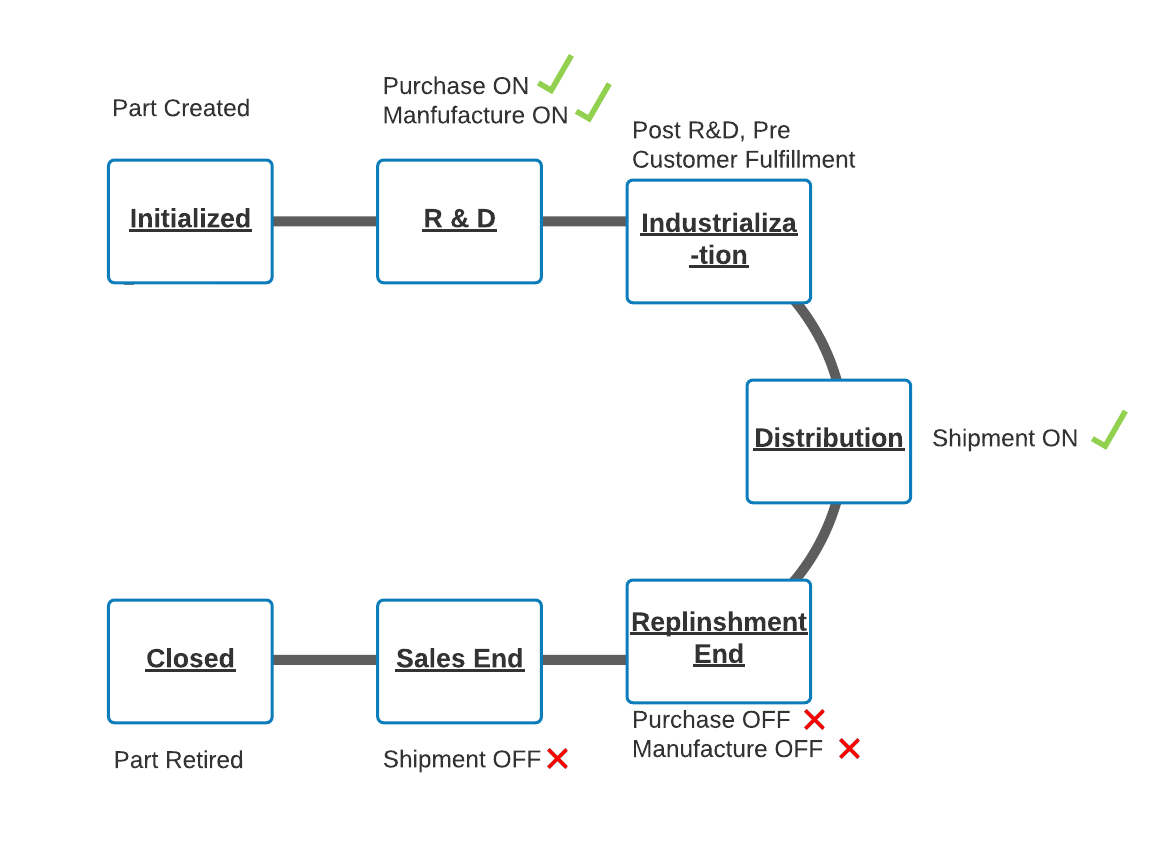
Receiving: R&D, Industrialization, Distribution
Create and Release BOM: R&D, Industrialization, Distribution
Production: R&D, Industrialization, Distribution
Add as Required Part to BOM: R&D, Industrialization, Distribution, Replenishment End, Sales End
Shipping: Distribution, Replenishment End
How to Change a Part's Lifecycle
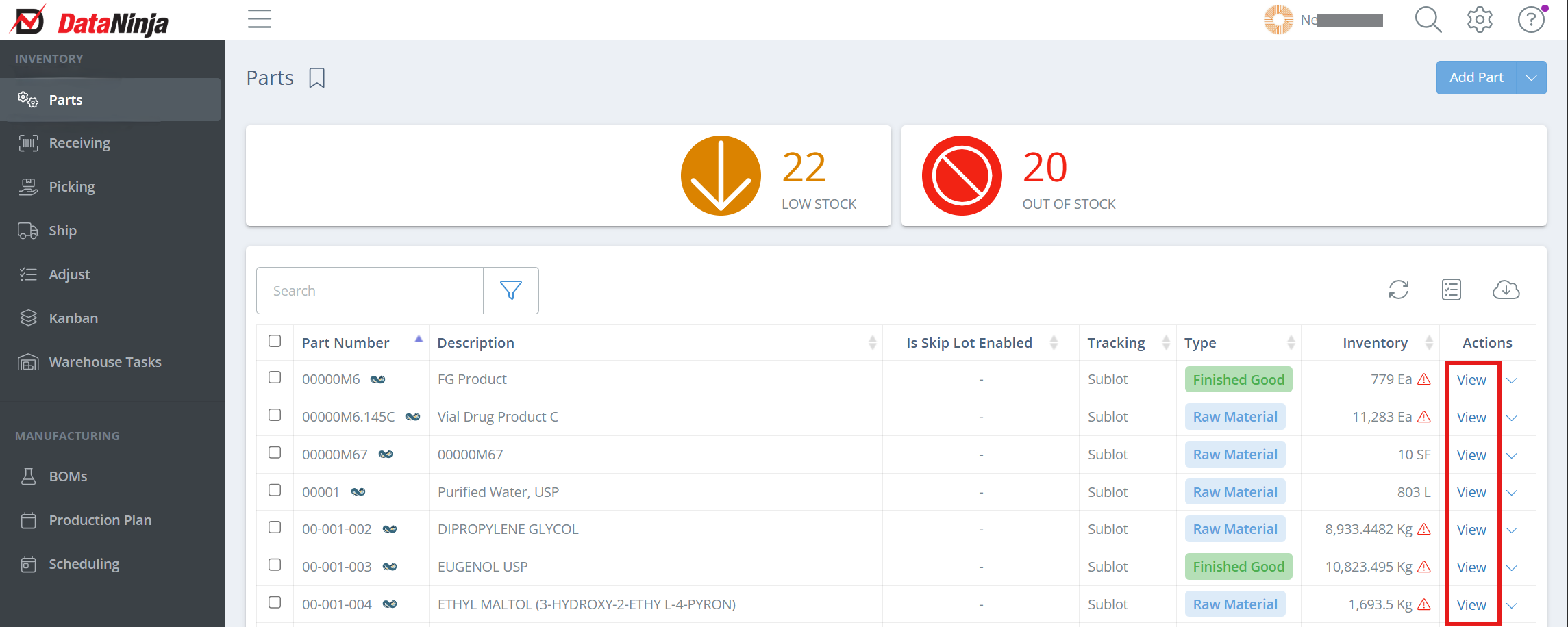
On the Parts page, find and open the relevant part, either by double clicking on it, or clicking 'View' in the Actions column.
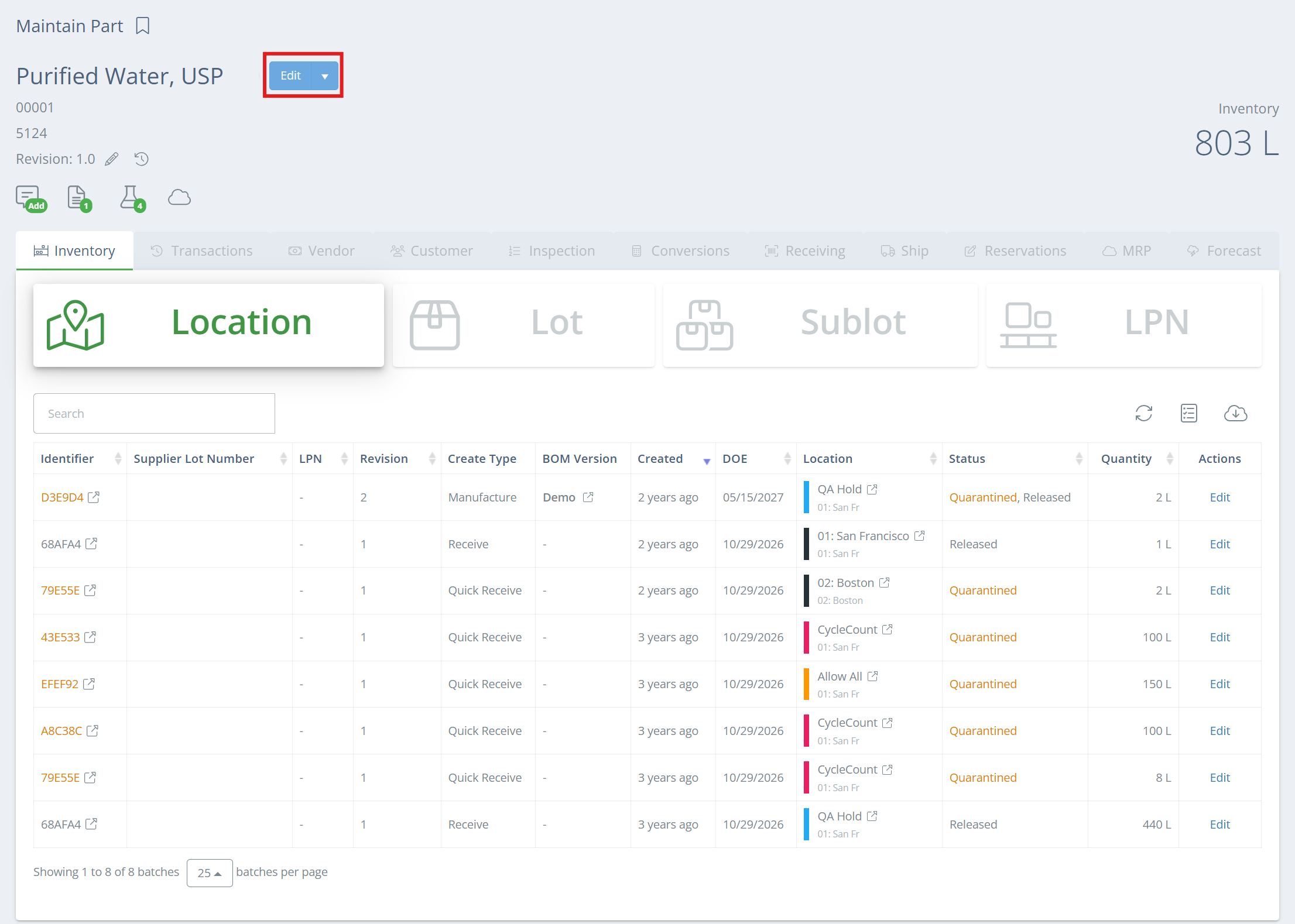
On the Maintain Part page, click Edit next to the part name, then scroll to the 'Life Cycle' field and select the appropriate option.
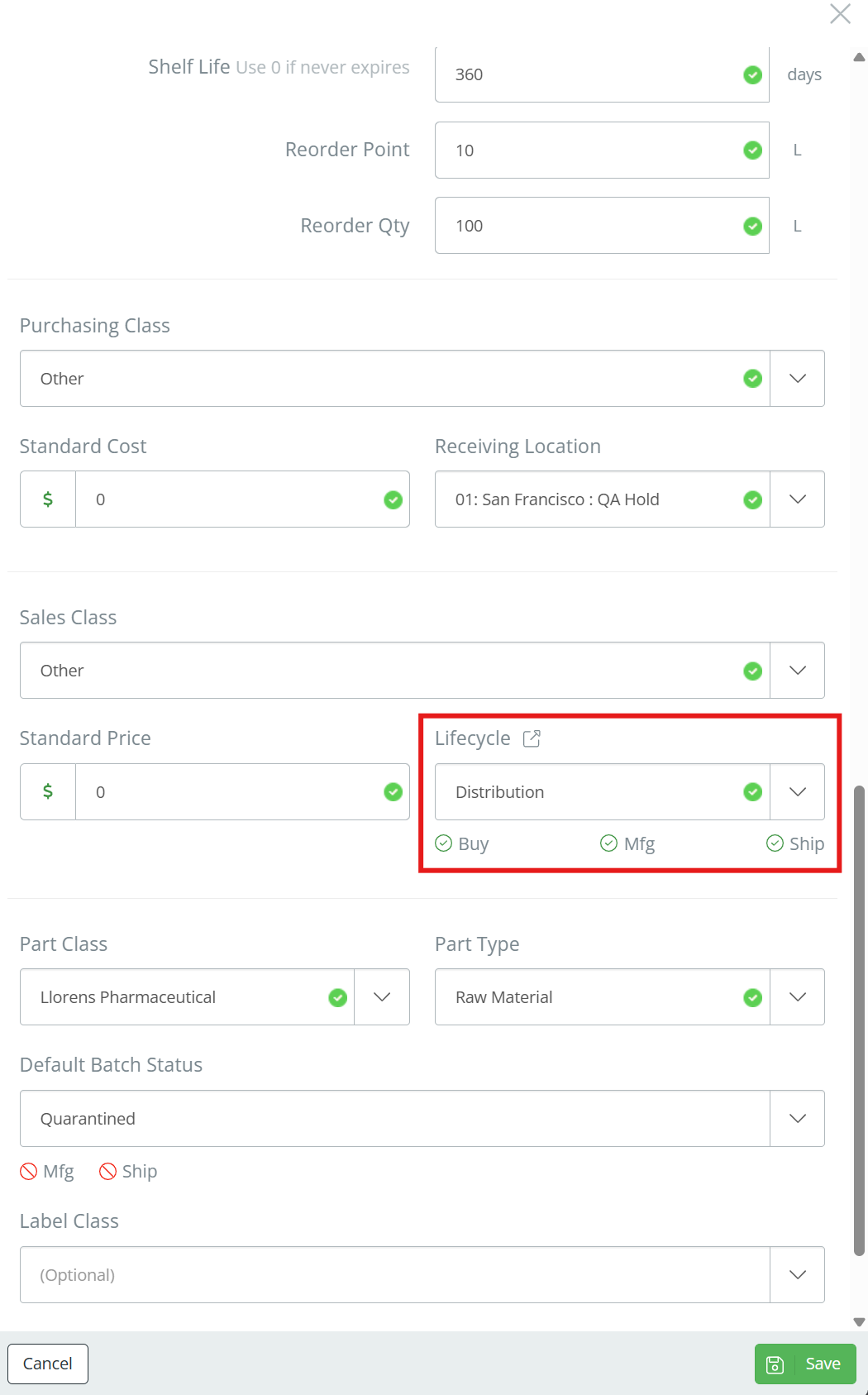
If you aren't sure what restrictions each Lifecycle has, watch for a check or an 'X' next to "Buy", "Mfg", and "Ship" underneath the Lifecycle field. Note that "Mfg" refers to new production runs that produce this part, not runs that consume this part during manufacturing. Click 'Save' when finished.
Updated 10 days ago